


Customer data management tools help companies collect, combine, organize, govern and use customer data across their systems. Some collect events from websites and apps. Others store that data, transform it, report on it, or serve customer context to applications and AI agents.
Quite a lot has changed since we last updated this list. Fivetran and dbt Labs merged. IBM bought Confluent. Salesforce has agreed to buy Braze. And AI agents now need customer context in the moment, not in tomorrow's batch.
These 18 tools cover different parts of a customer data stack. They aren't interchangeable, and most companies need a combination.
The short answer, by job:
- Collect and govern behavioral data: Snowplow
- Serve real-time customer context to apps and AI agents: Snowplow Signals
- Store and process it: Snowflake, Databricks, BigQuery or Amazon Redshift
- Stream it between systems: Confluent
- Transform it: dbt or Dataform
- Bring in data from other tools: Fivetran or Airbyte
- Report on it: Looker, Tableau or Power BI
- Analyze product usage: Amplitude
- Act on it in campaigns: Braze or Iterable
- Catalog and govern it: Atlan
The 18 tools at a glance
| # | Tool | Category | Mainly used by | Best for |
|---|---|---|---|---|
| 1 | Snowplow | Customer data infrastructure | Data engineers | Governed behavioral data in your warehouse or stream |
| 2 | Snowplow Signals | Real-time customer context | App and agent developers | In-session attributes for apps and AI agents |
| 3 | Snowflake | Warehouse and lakehouse | Data teams | Managed platform with separate storage and compute |
| 4 | Databricks | Warehouse and lakehouse | Data and ML teams | Analytics, engineering and ML on one lakehouse |
| 5 | Google BigQuery | Warehouse and lakehouse | Data teams | Serverless analytics on Google Cloud |
| 6 | Amazon Redshift | Warehouse and lakehouse | Data teams | Analytics on AWS |
| 7 | Confluent | Event streaming | Platform engineers | Managed Apache Kafka |
| 8 | dbt | Data transformation | Analytics engineers | Tested, version-controlled SQL transformations |
| 9 | Dataform | Data transformation | Analytics engineers | SQL transformations in BigQuery |
| 10 | Fivetran | Ingestion | Data engineers | Managed connectors |
| 11 | Airbyte | Ingestion | Data engineers | Open source connectors |
| 12 | Looker | BI and semantic layer | Analysts and business users | Shared metric definitions |
| 13 | Tableau | BI and semantic layer | Analysts and business users | Visual exploration |
| 14 | Power BI | BI and semantic layer | Analysts and business users | Reporting for Microsoft teams |
| 15 | Amplitude | Product analytics | Product teams | Self-serve product analysis |
| 16 | Braze | Customer engagement | Marketers | Behavior-triggered messaging |
| 17 | Iterable | Customer engagement | Marketers | Lifecycle campaigns |
| 18 | Atlan | Catalog and governance | Data stewards and business users | Finding and agreeing on data |
How we chose these tools
We picked tools that cover the main jobs in a cloud customer data stack, described each from the vendor's own docs and announcements, and checked ownership in November 2026. This isn't a performance ranking, and we haven't tested all 18 against the same criteria.
And yes, we're Snowplow, so our two products come first. They collect and serve customer data, which is a different job from most of the list.
Customer data infrastructure
Behavioral data records how people (and, more and more, AI agents) interact with your websites and apps. Every click, search and add-to-cart is an event. Customer data infrastructure (CDI) collects those events, checks them, enriches them and delivers them to wherever your teams work.
1. Snowplow
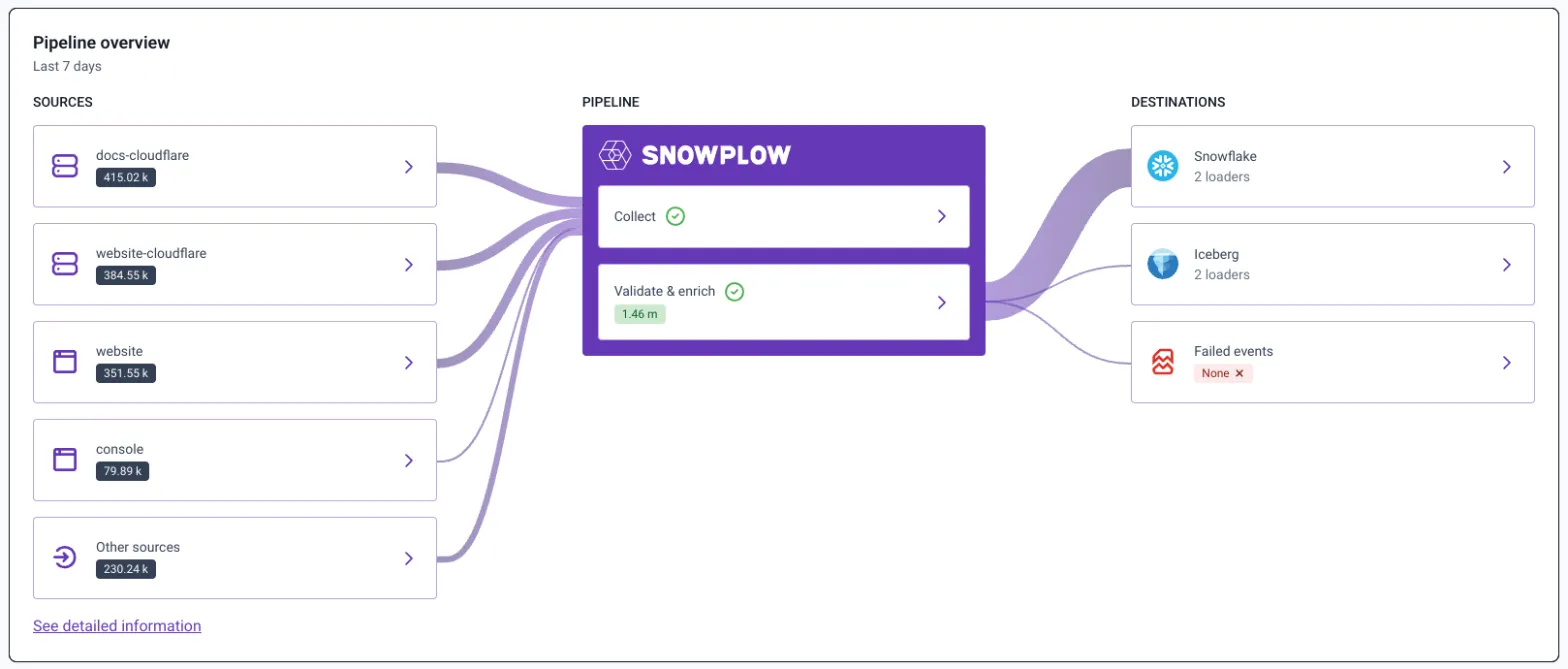
Snowplow is customer data infrastructure. In Event Studio, teams define events, their properties and who owns them before tracking starts, in a tracking plan. Schemas and event specification metadata then help downstream teams understand the data.
The pipeline:
- Collects events from web, mobile, server-side and IoT trackers, plus webhooks from third-party tools.
- Validates each event against its schema. Events that fail go to failed events, not the main events table, so you can fix and reprocess them.
- Can also check events against tracking plan rules. By default, events that break those rules still load, with an entity describing the problem. You can route them to failed events instead.
- Enriches events, for example with geolocation.
- Loads them into Snowflake, Databricks, BigQuery, Redshift, Synapse Analytics or a data lake, and can forward events in real time to tools like Amplitude and Braze.
Good for: one governed source of behavioral data for analytics, personalization and AI, in your own warehouse.
Works with: every warehouse and lakehouse on this list, plus dbt packages for sessions, users and attribution.
Keep in mind: Snowplow can be hosted by us, managed in your own AWS, Google Cloud or Azure account, or self-hosted, and features vary by deployment and subscription. Event Studio, event forwarding and Identities are paid add-ons. Event Studio, Signals and Identities aren't available self-hosted.
See your own data in Snowplow
Try Snowplow free for 14 days. We host the pipeline, so you can track your own app and load validated events into your warehouse.
Real-time customer context
Warehouses are great for history. But a personalization engine or AI agent often needs to know what this customer is doing right now, with a predictable response time.
2. Snowplow Signals
Snowplow Signals calculates customer attributes from incoming events in real time and serves them to your applications through an API. It can also bring in pre-calculated attributes from Snowflake, BigQuery and Databricks, which refresh on a schedule (hourly by default).
You define attributes in Snowplow Console, such as "product pages viewed in the last 10 minutes", or in code with the Python SDK. AI agents can read them through the Signals MCP server (MCP is the standard way agents discover and call tools).
Good for: in-session personalization, giving AI agents context about the user, triggering actions, and serving fresh features to ML models.
Works with: your Snowplow pipeline, so there's no separate stream processor or online store to build. There's a free tier, capped at 5 million events a month.
Keep in mind: Signals serves the values. Your application or agent still decides what to do with them.
Warehouses and lakehouses
A data warehouse is where most customer data ends up. Warehouses and lakehouses now overlap a lot, so the right choice depends on your cloud, workloads and governance needs.
3. Snowflake
Snowflake is a managed data platform that runs on AWS, Azure and Google Cloud.
Good for: teams that want storage and compute scaled separately, fine-grained access controls and data sharing.
Works with Snowplow: Snowplow loads events into Snowflake, and Signals can sync attributes from it. (Snowplow technology partner)
Keep in mind: compute is billed by usage, so set budgets early.
4. Databricks
Databricks is a lakehouse platform built on open formats, covering data engineering, analytics and machine learning. Unity Catalog handles governance.
Good for: teams that run heavy data engineering or ML alongside analytics.
Works with Snowplow: Snowplow loads events into Databricks and is available in Databricks Partner Connect. Signals can sync attributes from it. (Snowplow technology partner)
Keep in mind: it's a broad platform. Decide early who owns cluster and cost management.
5. Google BigQuery
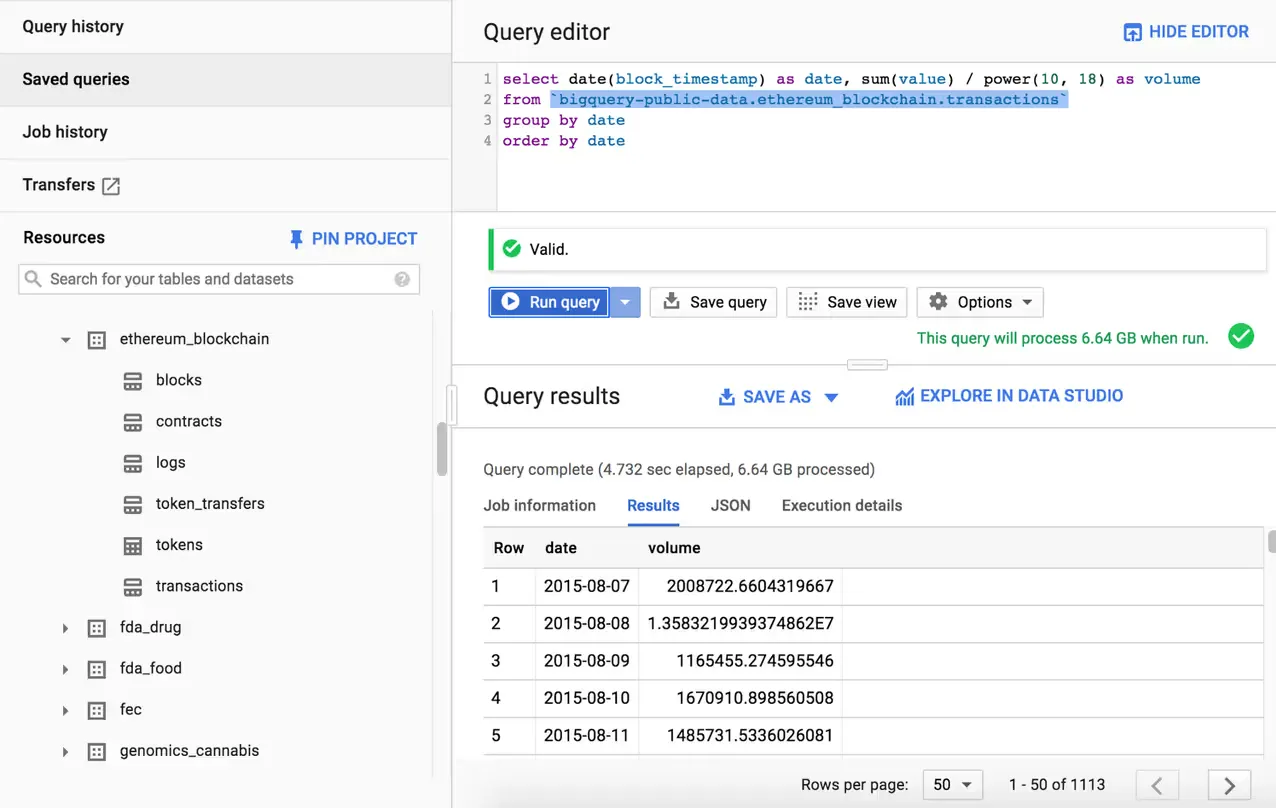
BigQuery is Google Cloud's serverless data warehouse. BigQuery ML lets you build models in SQL.
Good for: teams already on Google Cloud.
Works with Snowplow: Snowplow loads events into BigQuery, and Signals can sync attributes from it. (Snowplow technology partner)
Keep in mind: on-demand pricing charges by data scanned, so partition and cluster your tables.
6. Amazon Redshift
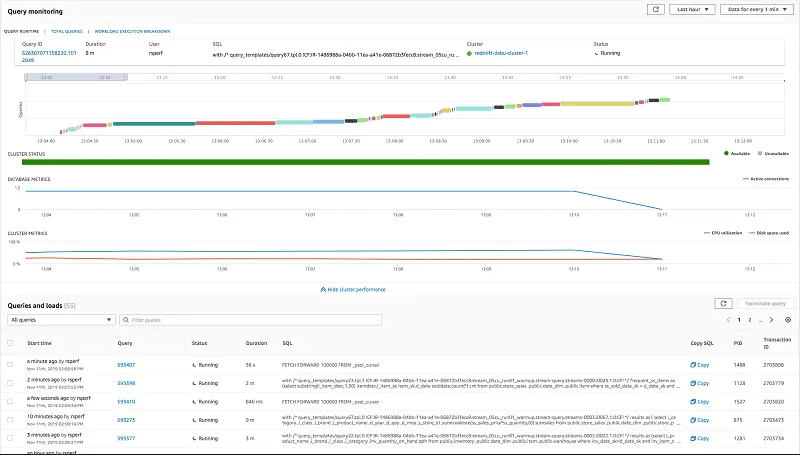
Amazon Redshift is the AWS data warehouse, available as provisioned clusters or Redshift Serverless.
Good for: teams whose data already lives on AWS.
Works with Snowplow: Snowplow loads events into Redshift and can run in your own AWS account. (Snowplow technology partner)
Keep in mind: if most of your stack runs on another cloud, the AWS-native benefits matter less.
Event streaming
Streaming platforms move events between systems as they happen, for fraud checks, live dashboards and operational apps. (See batch vs stream processing if you're not sure which you need.)
7. Confluent
Confluent is a data streaming platform built on Apache Kafka, as a managed service or software you run. IBM completed its acquisition in March 2026.
Good for: companies that want Kafka without operating it themselves.
Works with Snowplow: Snowbridge, Snowplow's event router, can send enriched events to Kafka. (Snowplow technology partner)
Keep in mind: streaming adds moving parts. Make sure you really need seconds, not minutes.
Data transformation
Transformation turns raw events into clean tables, such as sessions, users and conversions, that analysts and BI tools can use.
8. dbt
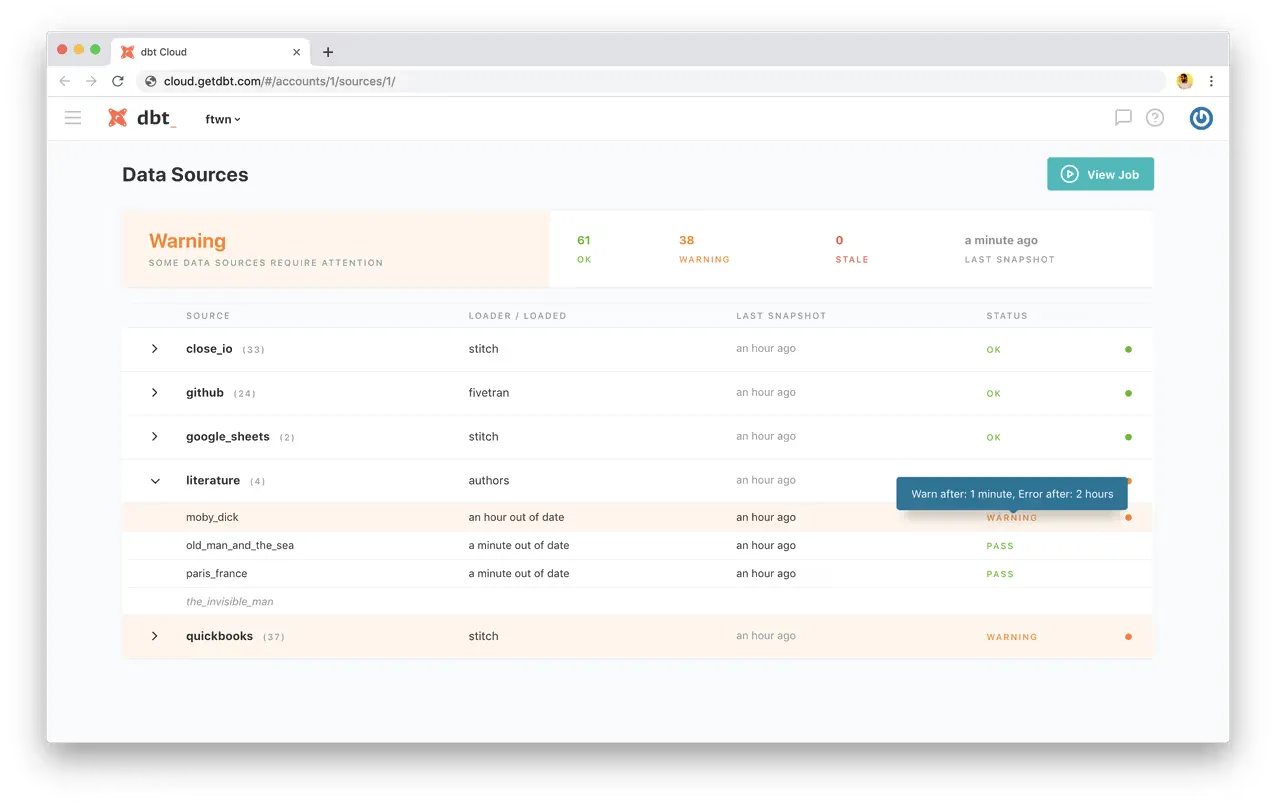
dbt lets teams write transformations in SQL, with testing, documentation and version control. dbt Core is open source. Fivetran and dbt Labs completed their merger in June 2026, and dbt is still its own product.
Good for: teams that want analytics engineering to work like software engineering.
Works with Snowplow: Snowplow publishes dbt packages, including Unified Digital and Attribution. (Snowplow technology partner)
Keep in mind: dbt transforms data in your warehouse. It doesn't extract or load it.
9. Dataform
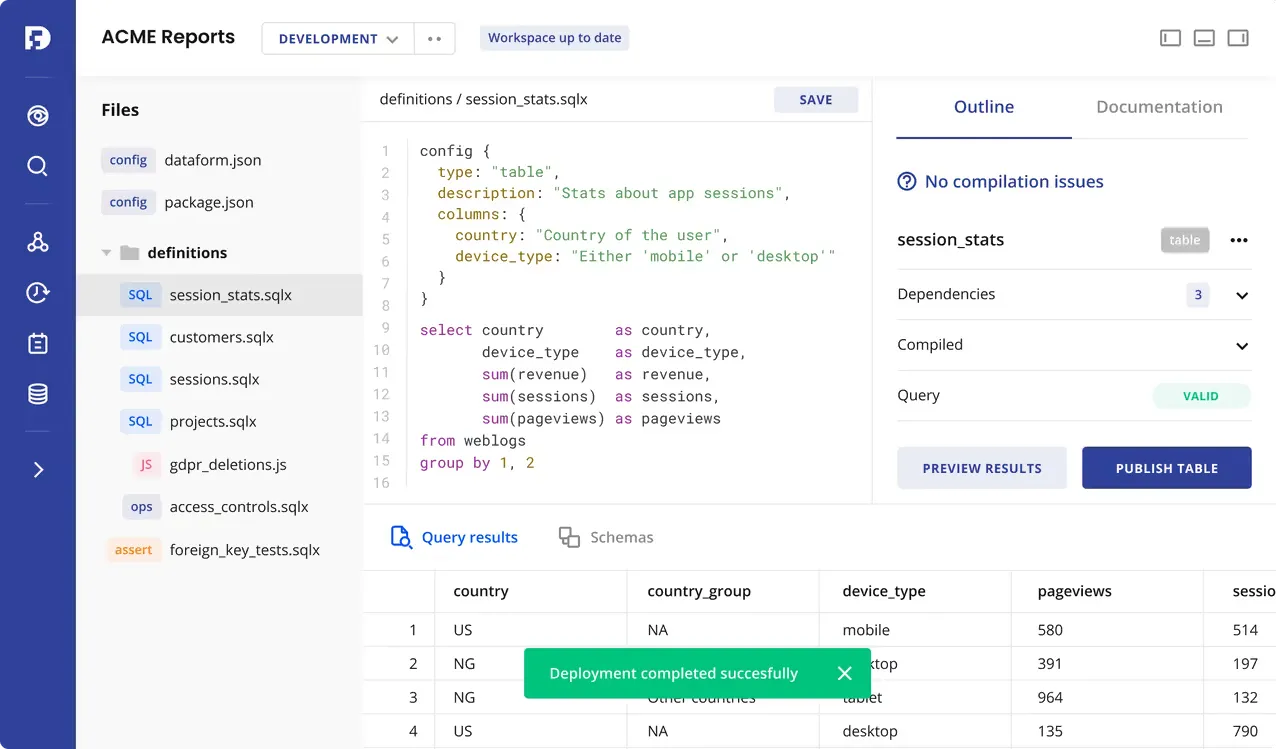
Dataform is Google Cloud's service for SQL transformation pipelines in BigQuery. Its core framework and CLI are open source and can run locally.
Good for: BigQuery teams who want transformations inside Google Cloud.
Keep in mind: it targets BigQuery. If you run more than one warehouse, dbt covers more ground.
Ingestion (ELT)
Ingestion tools pull in data from CRMs, billing systems, ad platforms and databases, so you can join it with behavioral data in the warehouse.
10. Fivetran
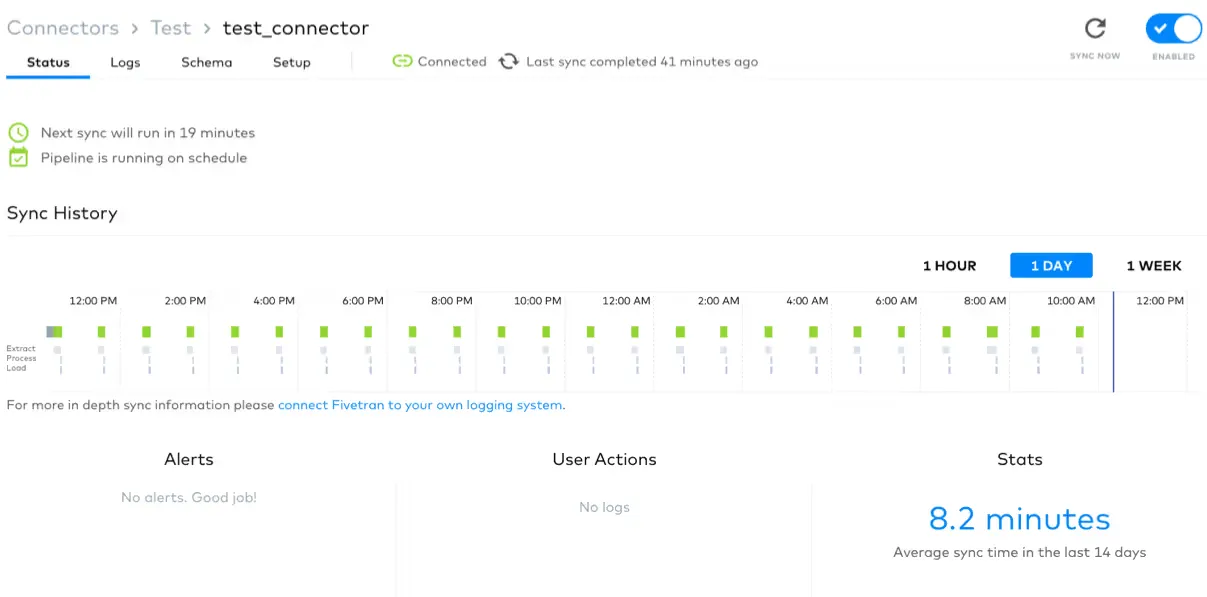
Fivetran is a managed ELT platform with prebuilt connectors that handle schema changes for you. It bought Census in 2025 and now sells Activations for syncing warehouse data out to business tools.
Good for: teams that want connectors to run without maintaining them.
Keep in mind: pricing is usage-based, so check how your volumes map to cost.
11. Airbyte
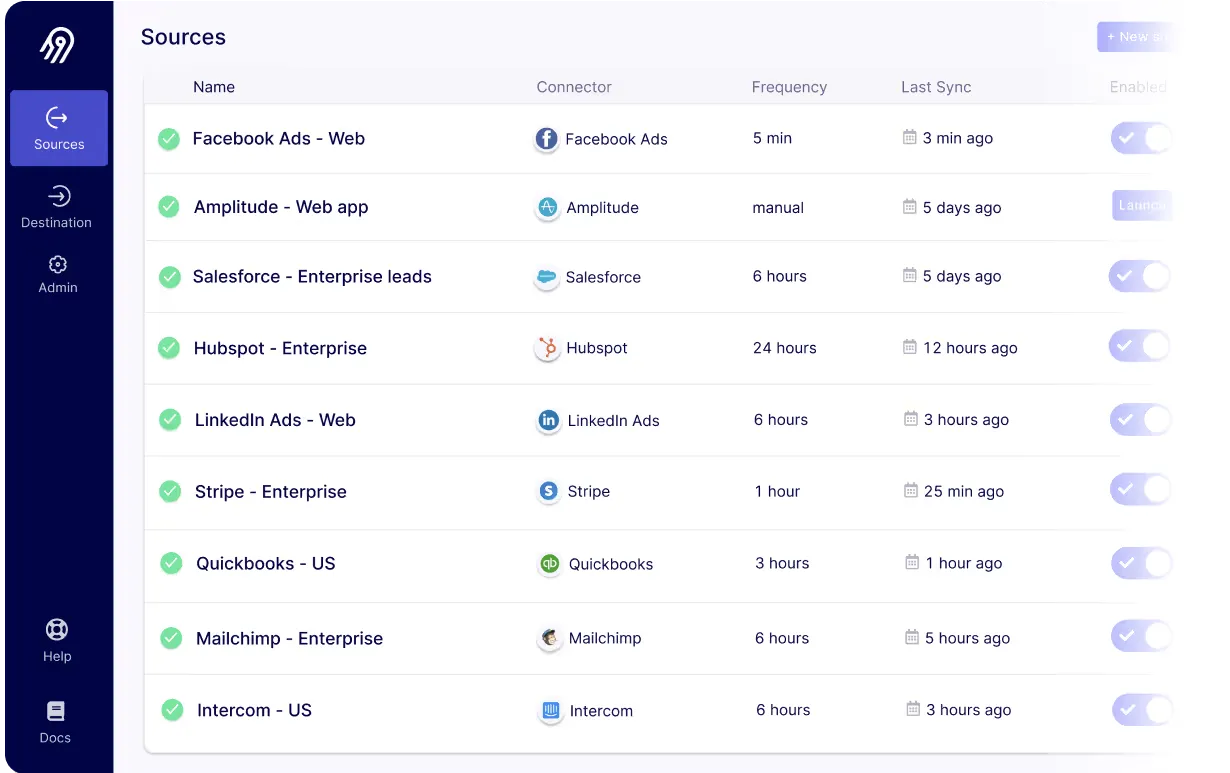
Airbyte is an open source ELT platform you can self-host or use as a cloud service, with tooling to build your own connectors.
Good for: engineering teams that want control over their connectors.
Keep in mind: self-hosting means you run and upgrade it yourself.
BI and semantic layer
BI tools turn modeled data into dashboards and reports. Semantic layers define shared metrics, such as revenue or active users, so BI tools and AI applications give more consistent answers.
12. Looker
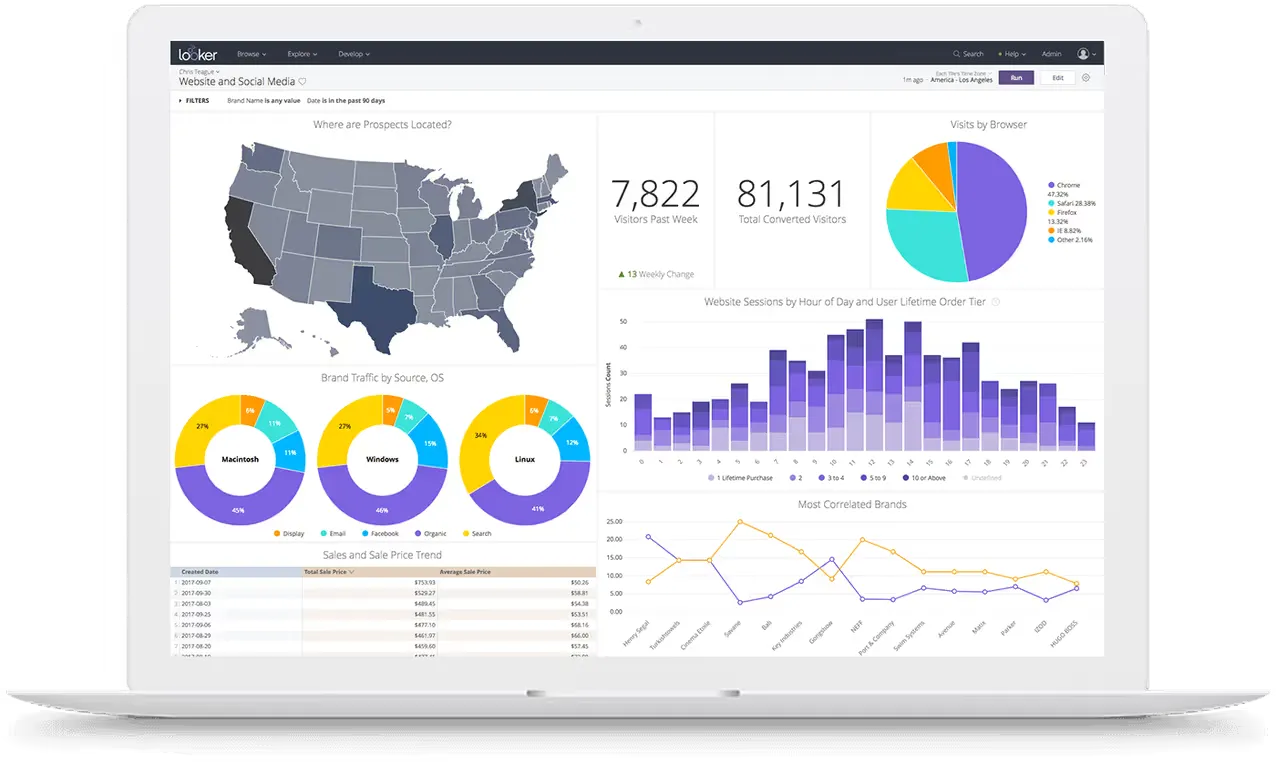
Looker is Google Cloud's BI platform. Its modeling language, LookML, defines shared metrics, relationships and access rules that can be reused across reports.
Good for: governed, consistent metrics across the business.
Works with Snowplow: you can analyze Snowplow data directly in Looker. (Snowplow technology partner)
Keep in mind: someone needs to own the LookML model.
13. Tableau
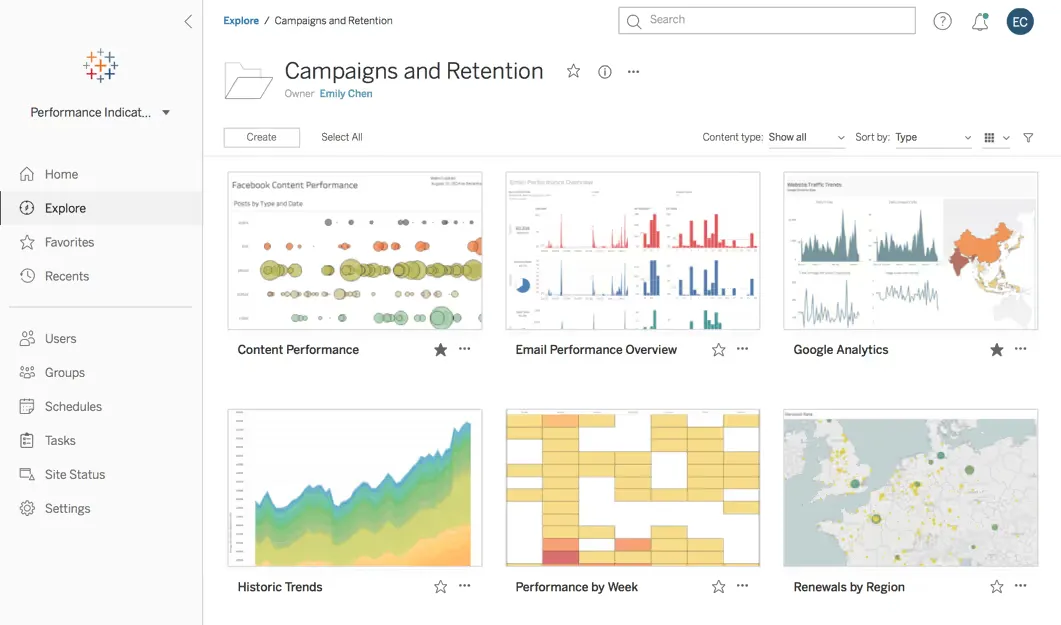
Tableau, part of Salesforce, is a BI platform known for visual, drag-and-drop exploration. Tableau Pulse, in Tableau Cloud, sends personalized metric updates and answers plain-language questions. Tableau retired its older Ask Data feature in 2024.
Good for: analysts and business users who explore data visually.
Keep in mind: keeping metrics consistent across many workbooks takes effort.
14. Power BI
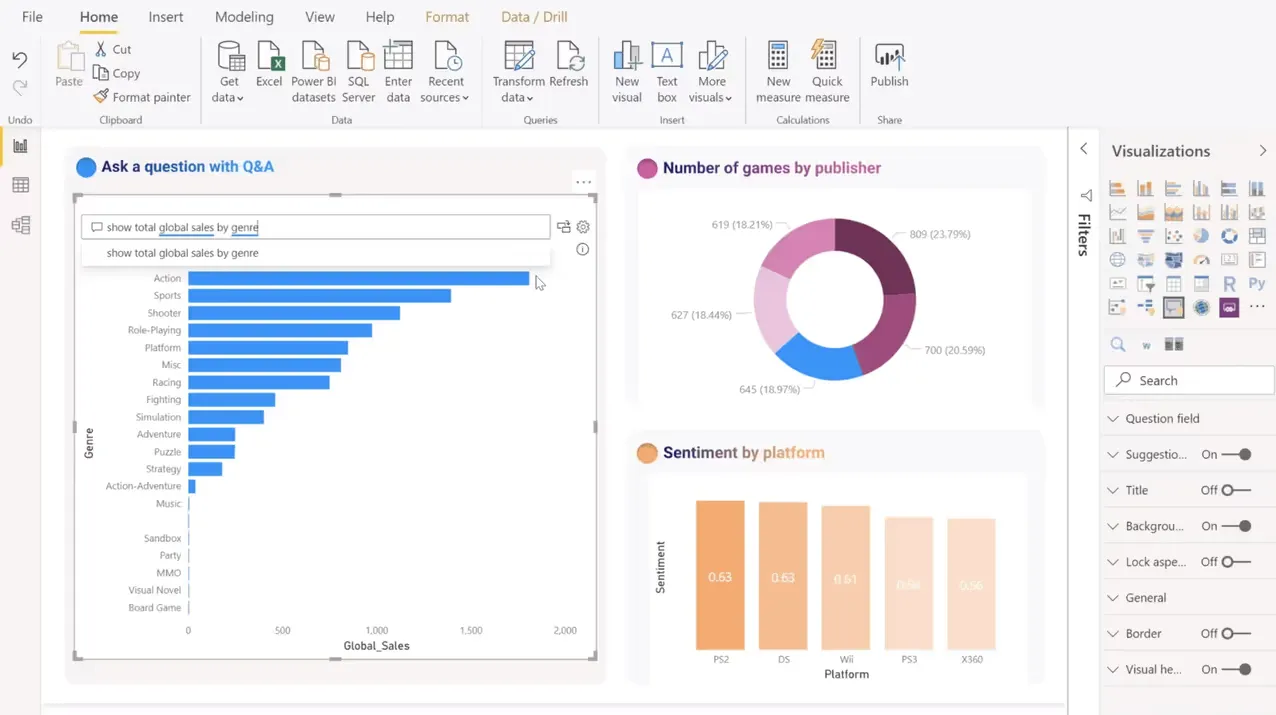
Power BI is Microsoft's reporting and semantic modeling platform, integrated with Microsoft Fabric, Excel and Teams.
Good for: organizations that run on Microsoft 365 and Azure.
Keep in mind: Copilot needs qualifying capacity, licensing and admin settings, so check what your plan includes.
Product analytics
Product analytics tools show how people use a product: funnels, retention, paths and cohorts, without SQL. (More in our guide to product analytics tools.)
15. Amplitude
Amplitude is a digital analytics platform covering funnels, retention, journeys and experimentation.
Good for: product teams that want self-serve answers about user behavior.
Works with Snowplow: Snowplow can forward events to Amplitude in real time through event forwarding. (Snowplow technology partner)
Keep in mind: if data comes from several sources, agree on event names first.
Customer engagement and activation
This is where customer data turns into emails, push notifications and in-app messages triggered by what customers do.
You'll also see customer data platforms (CDPs) here. A CDP builds profiles and audiences for marketing. Customer data infrastructure creates the governed event data that analytics, product, marketing and AI all use. Many companies run both. Our post on CDI vs CDP explains the difference.
16. Braze
Braze is a customer engagement platform for email, push, SMS and in-app messaging. Salesforce agreed to acquire Braze in October 2026, pending approvals.
Good for: consumer brands running behavior-triggered messaging.
Works with Snowplow: Snowplow can forward events to Braze in real time, so campaigns react to fresh behavior. (Snowplow technology partner)
Keep in mind: watch how the Salesforce deal changes roadmap and packaging.
17. Iterable
Iterable is a cross-channel marketing platform for email, SMS, push and in-app campaigns.
Good for: lifecycle campaigns across several channels.
Works with Snowplow: Snowplow can collect Iterable's email, SMS and push events through a webhook, and send events to Iterable through Google Tag Manager Server Side. (Snowplow technology partner)
Keep in mind: agree on the events you send before building journeys.
Data catalog and governance
As the stack grows, people need to find data, understand it and know whether to trust it. (More in our guide to data governance.)
18. Atlan
Atlan helps business and data teams discover datasets, trace lineage, manage ownership and agree on definitions in a shared glossary. Its conversational search helps people find data without knowing table names.
Good for: organizations where business users and data teams need the same definitions.
Keep in mind: a catalog needs ongoing ownership, or definitions drift as the data changes.
How to choose customer data management tools
There's no single "best" stack. But a few questions narrow it down fast.
Where does your data live today? Pick the warehouse or lakehouse your cloud and team already know. Snowplow loads into all four.
Do you need real time? Most reporting is fine with batch. Personalization and AI agents often aren't. If you need in-session context, plan for it from the start.
Who defines what the data means? If nobody writes it down when an event is designed, every downstream tool ends up with its own version. This is the one teams tend to skip.
How will you handle identity and privacy? Check how each tool links customer records, controls access, respects consent and supports deletion. It matters even more once customer data reaches AI agents.
Who will use it, and who will run it? Business-facing tools need a friendly interface. Engineering-led tools need people to maintain them.
What will it cost to run? Many of these tools bill by usage. Model your volumes before you sign.
Start with the job, then pick the tool
The right tools depend on what you're trying to do, where your data lives and who needs to use it. Start there, then pick tools that fit and share the same definitions of your data.
Want to see where Snowplow fits in yours? Try Snowplow for free for 14 days. We host the pipeline, so you can send events from your own app and load validated data into your warehouse without setting anything up.
Frequently asked questions
What are customer data management tools?

Customer data management tools collect, store, transform, analyze, govern and activate data about your customers. A typical stack includes customer data infrastructure to collect behavioral data, a warehouse or lakehouse to store it, transformation and BI tools to model and report on it, a catalog to govern it, and engagement tools to act on it.
What's the best cloud software for organizing customer data?
Snowflake, Databricks, BigQuery and Amazon Redshift are the main cloud options for storing and organizing customer data. The best fit depends on the cloud you already use and your workloads. If you already have a warehouse and need business users to find and understand data, a catalog such as Atlan is the next step.
Which data management tools are easiest for non-technical teams?
Atlan suits non-technical data managers who need to find datasets, manage definitions and work with data teams. Tableau, Power BI and Amplitude suit exploring and reporting on data. The right choice depends on whether your team needs to govern data, analyze it or run campaigns with it.
Which tools combine customer data from multiple sources?
Fivetran and Airbyte bring data from CRMs, billing systems and other tools into a warehouse, while Snowplow collects behavioral data from websites and apps. dbt or Dataform then joins those datasets using shared identifiers. If systems identify the same customer differently, you'll also need identity resolution, such as Snowplow Identities (a paid add-on).
How can business users and data teams collaborate on data management?
Atlan gives everyone a shared catalog and business glossary. Looker lets teams maintain common metric definitions. Snowplow Event Studio documents what each event means and who owns it. Together, they help teams agree on what data means before it reaches reports or applications.
How do you get real-time customer context into apps, contact centers or AI agents?
Snowplow Signals calculates customer attributes as events arrive, can combine them with attributes synced from your warehouse, and serves them through an API or MCP server. You connect your application or agent to Signals and design how it looks up the right customer. Snowplow's docs include an example accelerator for agents built on Google's CX Agent Studio.
Do I still need a customer data platform (CDP)?
It depends on who's using it. CDPs are built for marketers to manage profiles and audiences. Many companies now build a composable stack instead: Snowplow for collection, a warehouse for storage, and engagement tools like Braze or Iterable for activation.